

Mother Art Prize 2020

Winner’s Award: £500 Cash Prize + 2-week solo exhibition at The Showroom in Summer 2021
International Award: Up to 4 weeks residency at The White House Dagenham + up to £500 worth of art materials sponsored by Colart
Online Award: Online Exhibition with Richard Saltoun + 2 mentoring sessions with Sylvie Gormezano
Procreate Project is back with the 3rd edition of the Mother Art Prize 2020, the only international open call for self-identifying women and non-binary visual artists with caring responsibilities.
Its aim is to promote and support artists who are mothers/parents as well as drive the attention of the wider public to a broad-spectrum of themes that would otherwise be overlooked and devalued.
The prize is aimed at artists working in one or more of the following media: painting, drawing, mixed-media, photography, digital art, sculpture, ceramics, installation, textile, sound and video and there are no theme restrictions.
The judging panel is composed by:
-
Niamh Coghlan, Richard Saltoun Gallery Director
-
Pauline Desouza, Director of the Diversity Art Forum
-
Elvira Dyangani Ose, Director of The Showroom and Lecturer in Visual Cultures at Goldsmiths University
-
Eva Langret, Artistic Director Frieze London
-
Claire Mander, Chair of Steering Committee of UK Friends of the National Museum of Women in the Arts and Director of theCoLAB
-
Frances Morris, Director of Tate Modern
Rewards:
Exposure: Group show for up to 20 selected artists at Elephant West, Elephant Magazine’s pioneering project space in west London [6-29 of November 2020]; feature in the Procreate Project online shop and in the Elephant Magazine.
Winner’s Award: £500 Cash Prize + 2-week solo exhibition at The Showroom in summer 2021
International Award: Up to 4 weeks residency at the White House Dagenham [In partnership with Create London] + £500 worth of art materials sponsored by Colart
Online Award: Online Exhibition with Richard Saltoun [Sept 2020] + 2 mentoring sessions with Sylvie Gormezano, Director at Picture this productions and Chair of the Association of Women Art Dealers (AWAD)
* EXTENDED DEADLINE 16TH OF MARCH 9PM. The winner and the shortlisted artists will be announced in May 2020.
“Being both an artist and a parent is physically and emotionally demanding, lonely, financially crippling and most of the networking opportunities happen at bath time which is one of the most important times of day for parents regardless of access to childcare. The Mother Art Prize is a wonderful idea for recognising the achievements of artist-mothers. Putting those achievements together as an exhibition encourages a sense of community and support, giving space to consider the balance between the demands of parenting and artistic ambitions.”
— Candida Powell-Williams — Mother Art Prize Winner 2018
For any enquiry please contact us us at artprize@procreateproject.com
Please note, we are a non-for profit organisation and the submission fees are re-invested for the production of the prize and the group show.
Our partners and sponsors:
Group Show
Elephant West
6-29 of November 2020
62 Wood Ln, White City, London W12 7RH
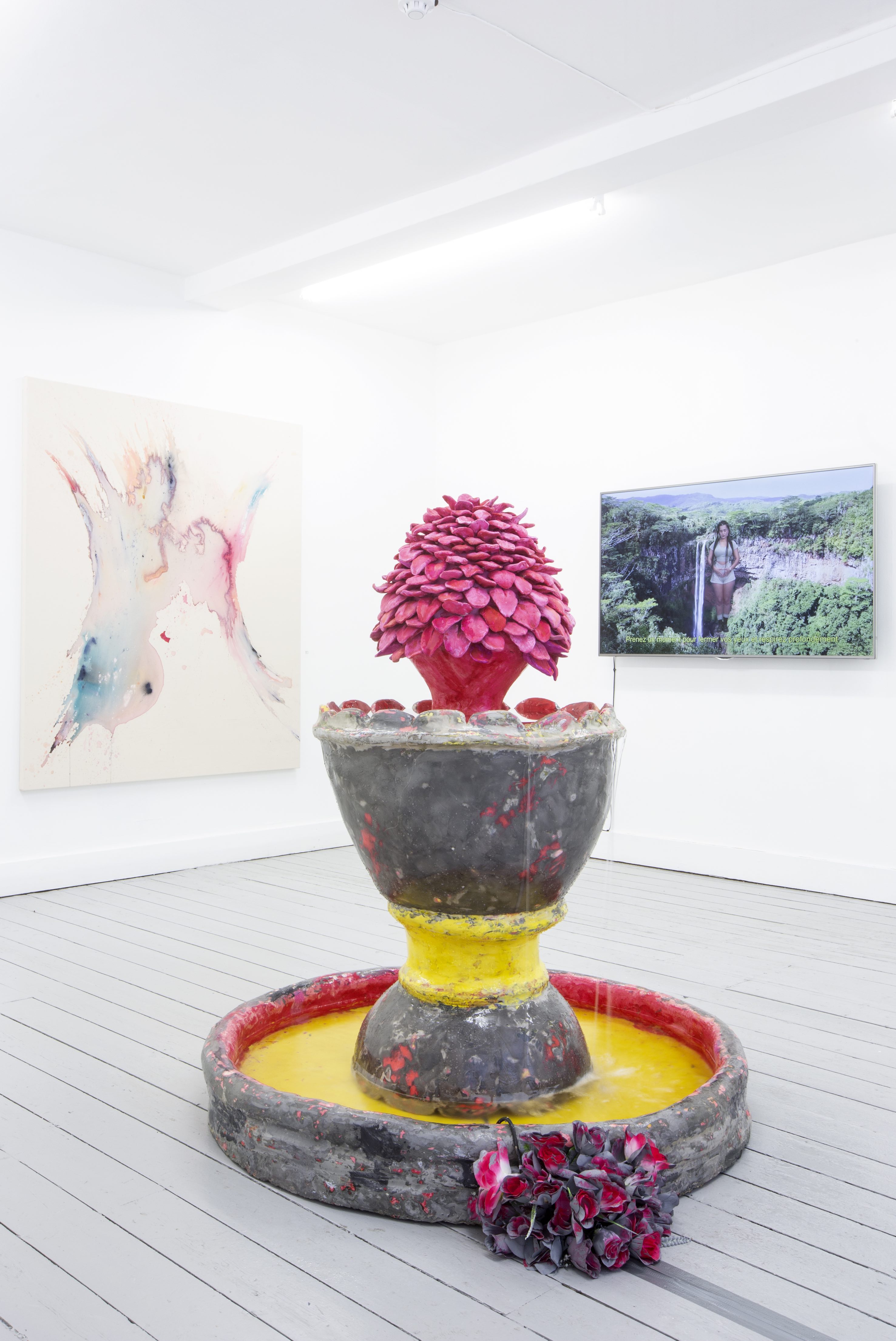
Group show Mother Art Prize May 2019 at Mimosa House, London




M.A.M.A. Issue n.36: Csilla Klenyánszki
Procreate Project, the Museum of Motherhood and the Mom Egg Review are pleased to announce the 36th edition of this scholarly discourse intersects with the artistic to explore the wonder and the challenges of motherhood. Using words and art to connect new pathways between the academic, the para-academic, the digital, and the real, as well as the everyday: wherever you live, work, and play, the Art of Motherhood is made manifest. #JoinMAMA
April, 2019 Art by Csilla Klenyánszki
Art by Csilla Klenyánszki
house ———— hold
“House/hold” is part of a research project on women’s position in the western society. It examines the evolution of gender equality in various subjects.“House/ hold” investigates the housework gap and its consequences while it provides an ironical solution for women: a 30 minute yoga session combined with domestic chores.
The session transforms the house into a space for meditation using domestic objects as its basic elements. Housework is being transformed into illumination: the repetitive act of house making becomes not just a physical but also a mental and spiritual act where women and their household objects become entangled. “House/hold” is a guide for domestic meditation.
Since the 1960s there have been lots of achievements in the path to gender equality in western society: The gender wage gap narrowed: In 1979, women working full time earned 62 percent of what men earned; in 2014, women’s earnings were 83 percent of men’s1. The number of women in the labor force with a college degree tripled: from 11.2 percent to 40.0 percent2. Woman don’t have to choose between a career and having children: while in the 1950s only 17 precent of mothers were in the labor force, in 2005 more then 60 precent of mothers with preschoolers had a paid job and 75 precent of mothers with school-aged children were working3. And yet, certain things didn’t change that much.

Due to industrialization and the proliferation of domestic appliances the amount of household chores done by women has dropped. On the other hand, the gap in housework distribution between men and women didn’t shrink that much and even worse since the 1990s it has been shrinking at a slower pace.
In the Netherlands, according to the Dutch Sociaal en Cultureel Planbureau (SCP)4 women spend on an average 9 hours more on housework than men.
In households with children this gap is even bigger: According to SCP, Dutch mothers spend1 an average of 20,6 hours a week fulfilling domestic chores and 4,4 hours on childcare and mothers with children under the age of 3 years spend 18 hours a week on childcare and 20,6 hours on domestic chores: 15 hours more than men. According to The Second Shift written by Arlie Hochschild, mothers do at least a month unpaid work more in a year than fathers.

One of the consequences of this housework gap is that women have access to less leisure-time than men simply because they spend more time in unpaid work such as domestic chores and childcare. According to the ONS5 women spend 5 hours less on leisure than man on a weekly basis. The survey has also found that time spent on leisure has risen for men and dropped for women since 2000.


M.A.M.A. Issue n.35: Natalie Ramus and Katie Manning
The ProCreate Project, the Museum of Motherhood and the Mom Egg Review are pleased to announce the 35th edition of this scholarly discourse intersects with the artistic to explore the wonder and the challenges of motherhood. Using words and art to connect new pathways between the academic, the para-academic, the digital, and the real, as well as the everyday: wherever you live, work, and play, the Art of Motherhood is made manifest. #JoinMAMA
February, 2019 Art by Natalie Ramus, words by Katie Manning
Art by Natalie Ramus
With my exploration of the materiality of the body I attempt to connect with the innately performative body in view of it’s visceral, abject qualities. Through the re-presentation of bodily materials (such as hair or skin), that have universal familiarity through subjective experience, I am interested in how the gap between viewer and artwork or artist can be bridged; the viewer becomes hyper-aware of their own body, therefore having an empathetic, perceived physical experience. I often use my body within my practice as a way of reclaiming space and time. This reclamation is motivated by my desire to challenge, illuminate and confront the expectations of women to exist within a restrictive framework of socially expected behaviour in a patriarchal society. I am fascinated with the public-private and appropriate-inappropriate dichotomy that surrounds discussions in relation to the body. My questioning is driven by assumed acceptable modes of behaviour in society, specifically when discussing the concept of the female in public space.”
Through the juxtaposition of the immediacy of the body as battery of memory, as site and material, and domestic, seemingly nostalgic, memory-imbued objects which often carry immersive qualities through scent, (such as bread, milk or soap) I am interested in how time and memory become elastic; and how meaning is an inherently subjective perspective.
More about Natalie:
Natalie Ramus is a multi disciplinary artist based in the Welsh borders. Using her body as material to explore public/private dichotomies produced by societal conventions of the appropriate and inappropriate, Natalie seeks to dismantle and illuminate, challenge and provoke that which she faces as a female with a performative, visceral, abject body. Natalie’s practice was seeded in a fine art background and as her practice evolved it has become increasingly action based; concerned with the notion of installaction. Natalie has performed in London, Cardiff and Manchester and has exhibited works throughout the UK, most recently at MAC Birmingham. She graduated from Master of Fine Art at Cardiff School of Art and Design with distinction in 2016.

Mothers Pride
Mothers Pride is a durational performance. It is a space which, like the body itself, is autonomous. Evolving over a period of nine hours it becomes a site of meditation through action. It considers the maternal female within public space. As a mother I feel much conflict between the label of mother- what society perceives that to be, and how I feel as a mother, artist, feminist, etc. The notion of what qualities society thinks makes a ‘good’ mother is problematic and I wonder how the role is performed on a day to day basis. I am asking myself- where does my performance of the label of mother end and my true embodiment of being a mother begin? Using Mothers Pride bread and milk, materials evocative of comfort and a nostalgic memory of happy nuclear families that never really existed, I will reclaim space. I will reclaim my right to define my own borders, my own edges, my own limits and ultimately I will move closer to understanding what these are/where they lie.
Materials: 350 loaves Mothers Pride Bread, 120L Milk, 10m Red Shibari Rope, Mop, Buckets x 5.
9 hour performance.
Performed at Buzzcut Festival, Glasgow, 2017
I made a baby out of bread,
Moulding its flesh against my own.
Building connections forged through process, through t i m e.
The bread an extension of my flesh,
The baby an extension of my body,
(of our bodies)
Decomposing [transformational] matter- spread between across surfaces
my flesh a glue
b e t
w
e e n
here and there // me and you
Ph by Julia Bauer


Words by Katie Manning
Which Way Do You Want to Go?
I ask this question more than you might think, mustering my best Muppet voice every time. And now my 4-year-old watchesLabyrinth as I did at his age, and I am becoming you: shuffling around the kitchen in the same style of open-toed house slippers that you always wore, baking chocolate rolls or biscuits. Yes, which way? The blue hands insist on an answer. Sometimes I look down at my hands and see yours kneading the dough.
I would choose this if I had a choice.
Originally published in Mom Egg Review vol. 16
Katie Manning is the founding Editor-in-Chief of Whale Road Review and an Associate Professor of Writing at Point Loma Nazarene University in San Diego. She is the author of Tasty Other, which won the 2016 Main Street Rag Poetry Book Award, and four chapbooks, including The Gospel of the Bleeding Woman. Her poems have appeared in Fairy Tale Review, New Letters, Poet Lore, Verse Daily, and many journals and anthologies. Find her online at www.katiemanningpoet.com